What are the symptoms of rosacea?
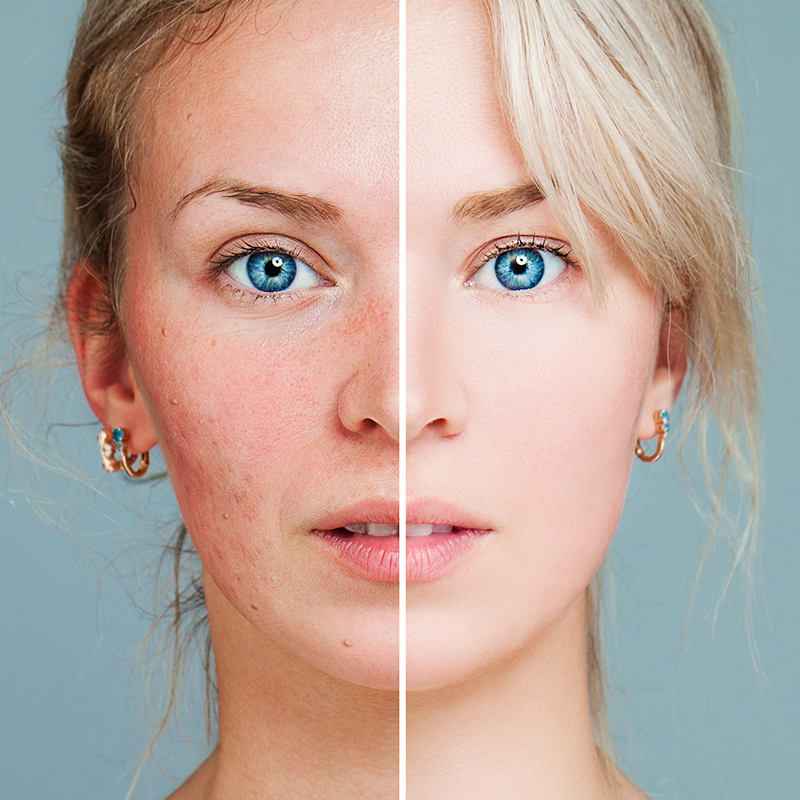
Rosacea is a common dermatological condition that only affects the face, particularly the nose, cheeks, forehead and chin. The eyes may be affected (ocular rosacea) but this is rarer. Rosacea is not acne, and the term “acne rosacea” which is sometimes used, is being phased out. This visible skin condition is often psychologically challenging because it causes disfiguration and is frequently mistaken for a sign of chronic alcoholism.
Three different forms, three symptom types
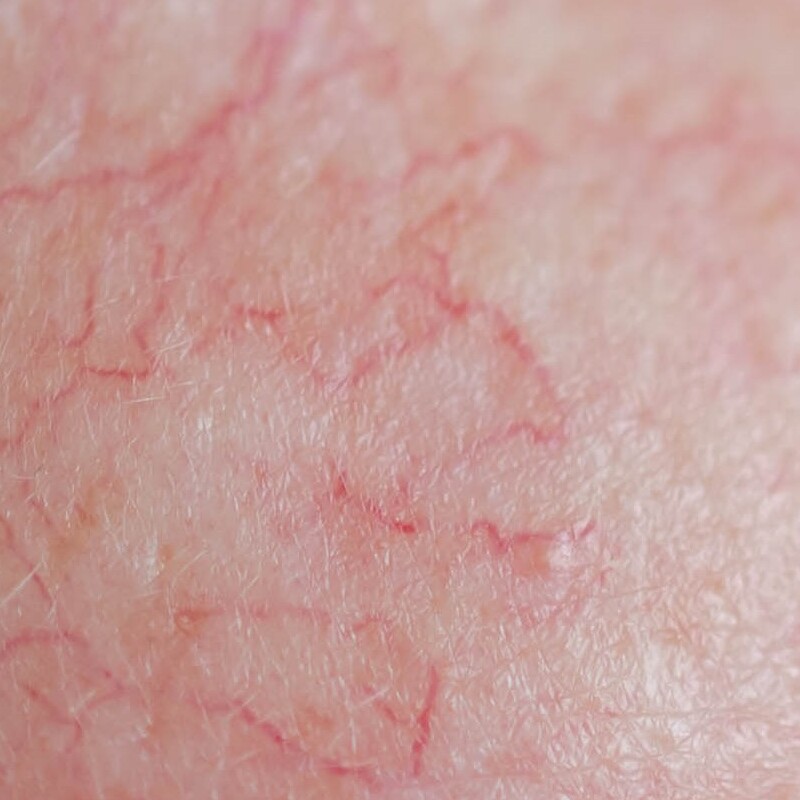
1/ Erythrosis and couperosis
It appears as redness on the face, with or without couperosis (small dilated vessels on the cheeks and nose). This redness may sporadically be accompanied by sensations of hot flushes on the face that quickly dissipates.
2/ The papulo-pustular form
Erythrosis is combined with flare-ups of pimples that resemble acne (red spots and small pustules, but no comedones), still found exclusively on the face
3/ The hypertrophic form
This form characterised by a large, bumpy nose is much rarer and almost exclusively affects men. It is called rhinophyma and is not related to alcohol consumption, unlike what many people think. All of these symptoms often cause significant everyday discomfort and impaired quality of life.
What causes rosacea?
Who is affected by rosacea?
Rosacea is three times more common in women than in men, and people with fair skin are the most affected.
Symptoms often appear around the age of 30, but it has a peak age of around 50.
A frequent characteristic of rosacea is that it occurs in sensitive skin.
What should I do?
A dermatologist is the best resource for identifying skin disorders, finding the cause of your skin issues, and developing an adapted treatment. Please consult your dermatologist, doctor or pharmacist so that they may best advise you on your personal skin regimen.
%20(1).jpg)

.jpg)
%20(1).jpg)