Rosacea or pityriasis rosea?
Pityriasis rosea is an inflammatory skin condition thought to be triggered by a temporary malfunction of the immune system. It typically causes red patches or scaly spots to appear on the trunk, arms and legs, developing within four to 14 days. The condition mainly affects children and young adults and is often accompanied by itching.
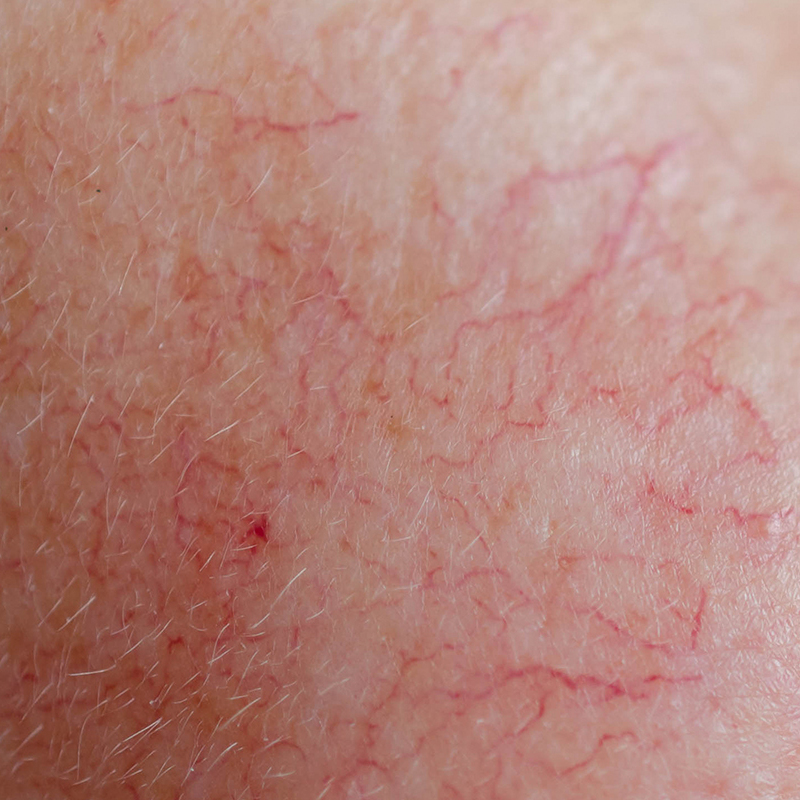
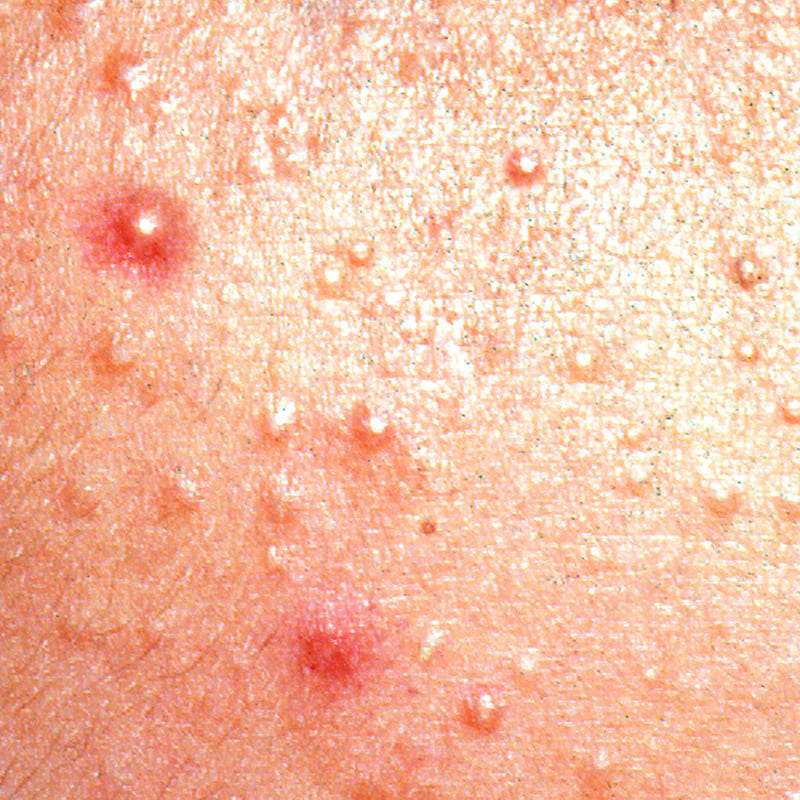
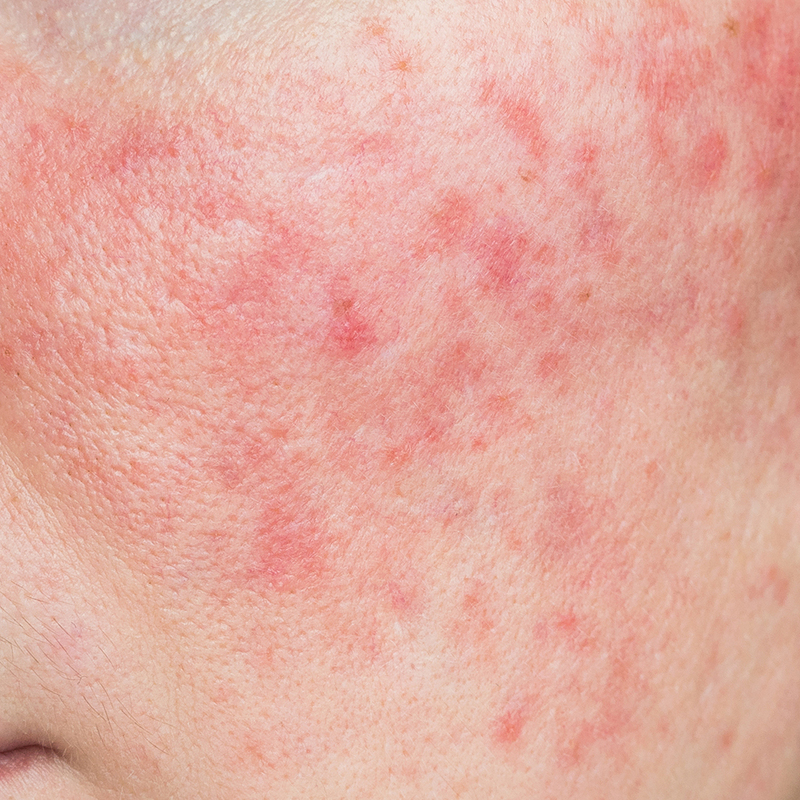
Although pityriasis rosea may occasionally affect the face, it usually has a different pattern and progression from rosacea. Rosacea primarily targets the central face and is associated with persistent redness, visible blood vessels and acne-like spots, rather than widespread rashes on the body.
If you notice red or rough patches on your skin, it’s best to consult a dermatologist for an accurate diagnosis, as pityriasis rosea and rosacea require different treatment approaches.
Rosacea or allergy?
Rosacea is not an allergic reaction. Instead, it’s a chronic inflammatory skin condition often triggered by overstimulation of the skin’s receptors through environmental or lifestyle factors such as temperature changes, spicy foods, alcohol or stress.
By contrast, a facial allergy, including sun allergy (photosensitivity) occurs when the skin reacts to an external allergen such as food, medication, skincare products or UV exposure. While both conditions can cause facial redness, allergies often lead to sudden inflammation, itching or swelling, whereas rosacea tends to cause persistent redness and visible blood vessels over time.

%20(1).jpg)