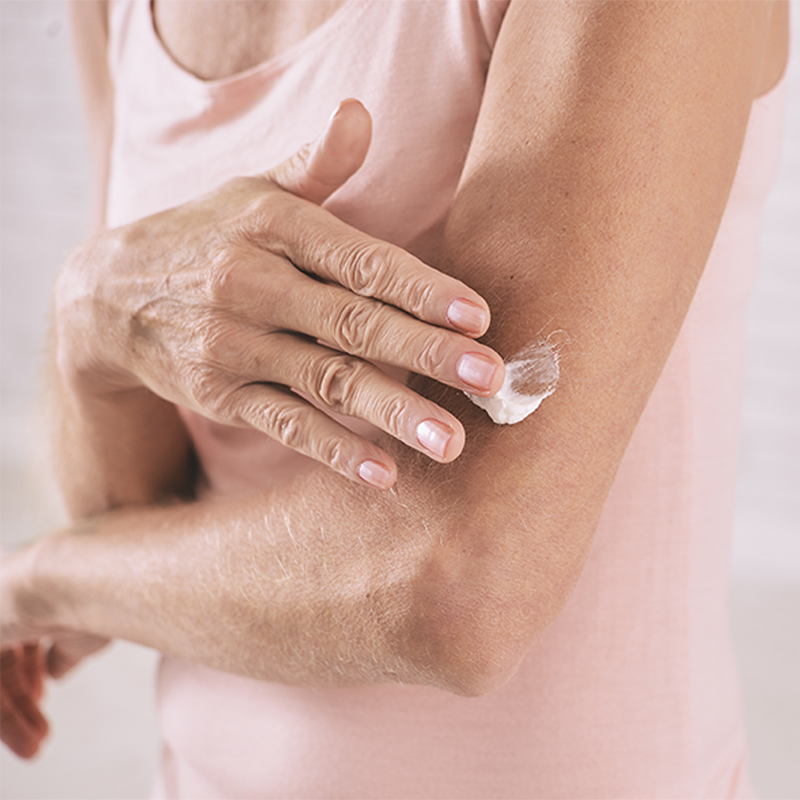
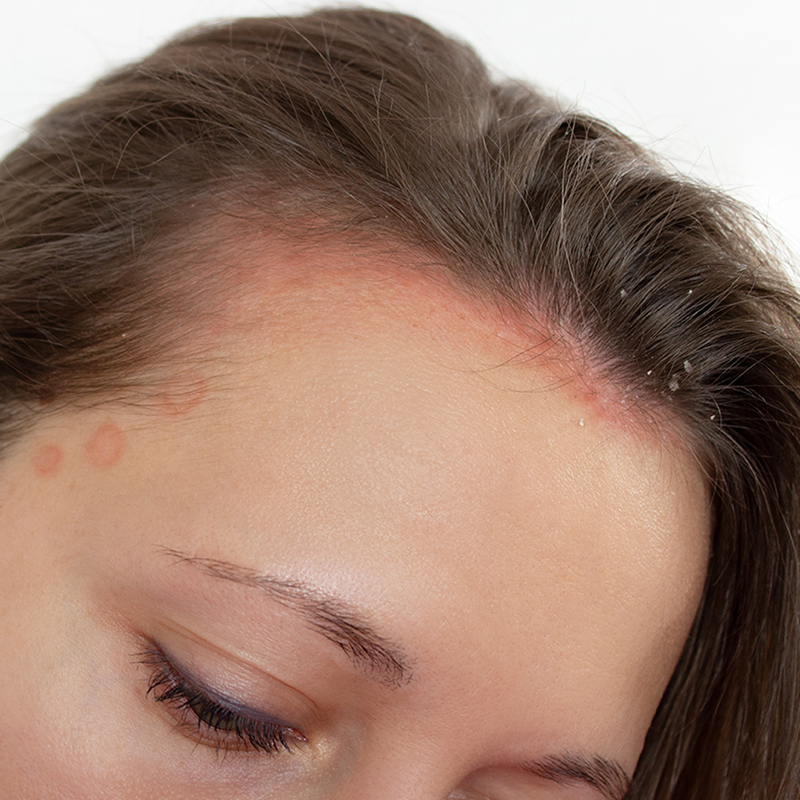
Who is affected by psoriasis?
Psoriasis can affect men and women of all ages, but it most commonly develops in young adults. Around one in three cases begin before the age of 20, and many people experience their first symptoms between the ages of 20 and 40. Although the condition can appear at any stage of life, early onset is often linked to a stronger genetic predisposition.
What causes psoriasis?
Psoriasis is a multifactorial skin condition influenced by both genetic and environmental factors. A family history is present in around 30–40% of cases, and while inheritance is not systematic, several genes are involved in increasing susceptibility
At the skin level, psoriasis occurs when epidermal cell turnover accelerates, leading to the buildup of thick, scaly patches. In people with a genetic predisposition, several triggering factors can cause or worsen flare-ups, including:
- Climate changes, particularly cold and dry weather
- Infections, especially throat or respiratory infections
- Psychological stress, which can influence the skin’s reactivity through neuromediators
- Local trauma, such as burns, friction or scratching (known as the Koebner phenomenon)
- Certain medications, including synthetic antimalarials, some blood pressure drugs, lithium salts and specific eye drops
Doctors are aware of these potential triggers, and it’s important not to discontinue any prescribed treatment unless a clear medical link to psoriasis has been proven.
Additionally, some health conditions and lifestyle factors are more common in people with psoriasis, such as metabolic syndrome (characterised by overweight, high cholesterol, high blood sugar and high blood pressure), as well as excessive alcohol consumption and smoking.

%20(1).jpg)




%20(2)%20(1)%20(1).jpg)
.jpg)