Key figures
- 50% of patients who have acne as a teenager also have it as adults
- 85% of these patients are women
- 92% of late acne is benign – but still unpleasant
What causes pimples and ageing?
The change in sebum quality causes acne.
Acne is caused by dyssebhorroea, a change in the quality of sebum, hypersebhorroea, an increase in the quantity of sebum, and hyperkeratinsation, an increase in the number of skin cells.
With dyssebhorroea, sebum’s composition is altered. It becomes oxidised and thickens. Secreted in large quantities – hypersebhorroea – it clogs the sebaceous glands.
At the same time, there is also a large increase, a hyperproliferation, in the sebaceous duct’s keratinocytes or skin cells. They stick to each other so that it becomes harder for dead cells to shed. The pilosebaceous canal – or hair shaft – becomes blocked and sebum can’t evacuate.
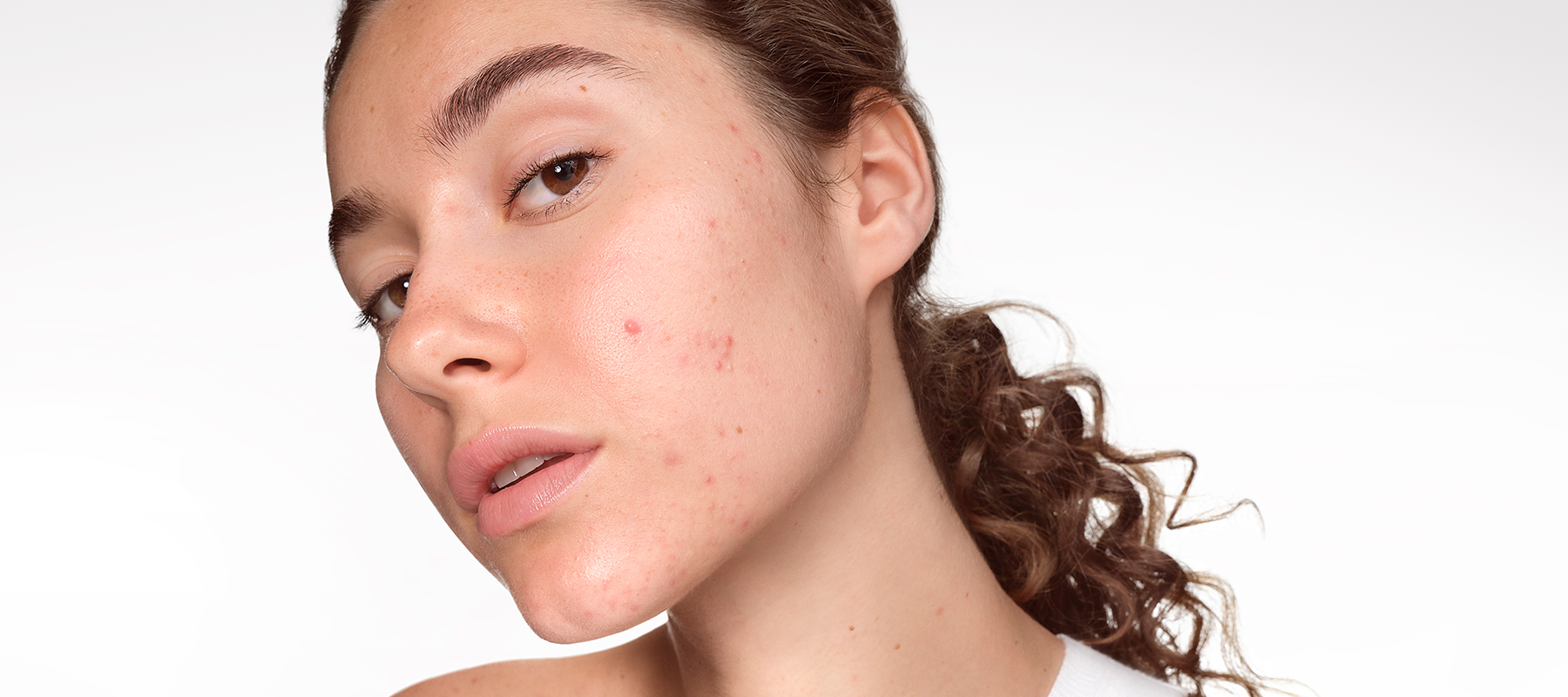
The result is one we’re all too familiar with: blemishes! They appear in two forms. There can be comedonal acne, consisting of blackheads and whiteheads. Inflammatory acne, more common in adult acne, is made up of pimples, pustules and papules. All leave marks as they heal and can possibly result in scars.
How skin changes as it ages
The ageing process affects the different layers of the skin. As we age, there is less keratinocyte renewal and our epidermis, or the top layer, gradually thins. Our skin becomes drier as the elements that retain water also diminish in quantity. The barrier function changes, leading to a higher amount of transepidermal water loss. There may be early signs of pigmentary irregularities. And the junction between the epidermis and dermis weakens.
In the dermis itself, the number of cells, veins and structural components, such as collagen and elastin, decreases. With this loss of skin tissue and elasticity, fine lines and the occasional wrinkle begin to form.
So when we thought we were done with pimples, they’re still there and they’re right beside brand new wrinkles. Both impact our well-being. They also force us to multiply the number of products we apply to our skin to address the different issues, adding the risk of irritation.
%20(1).jpg)